Central Florida is experiencing one of the fastest population growth rates in the US, but with a public transit system that is not able to keep up the pace.
By Katina Rentas Negrón | 21 de abril de 2026
Central Florida has historically been a region that prioritizes cars over having walkable cities. More than 75% of Central Florida’s population commutes to work, with less than 2% using public transit according to available data. The Central Florida area is becoming more dispersed, focused on auto-oriented development, single-family residential dominant, and prioritizing roads that lead to poor connectivity.
In the last decades, Central Florida has been on the receiving end of migration. Factors like high cost of living, affordability issues, and weather events have brought more people to move to southern states. In 2025, the Central Florida region of Orlando-Sanford-Kissimmee, ranked tenth in the Top 10 U.S. Metro Areas by Numeric Growth.
Orange county has some of the highest cost of living but with most of the workforce in the area. This means that people have to move to surrounding counties like Osceola, Lake, Polk, Volusia, and travel to work — in some cases up to upwards of an hour. The cycle of automobile dependency continues as the region focuses on road expenditures, adding toll roads, and not investing in a better transit system that can help move its population from one point to another.
How do you get people to their jobs if they cannot afford to live in the places they work? In a survey conducted by Orange county, residents revealed that traffic congestion was the No. 1 challenge they faced. Other priorities included building a mass transit system to include buses, trains and other modes of transportation, as well as pedestrian and bicycle safety.
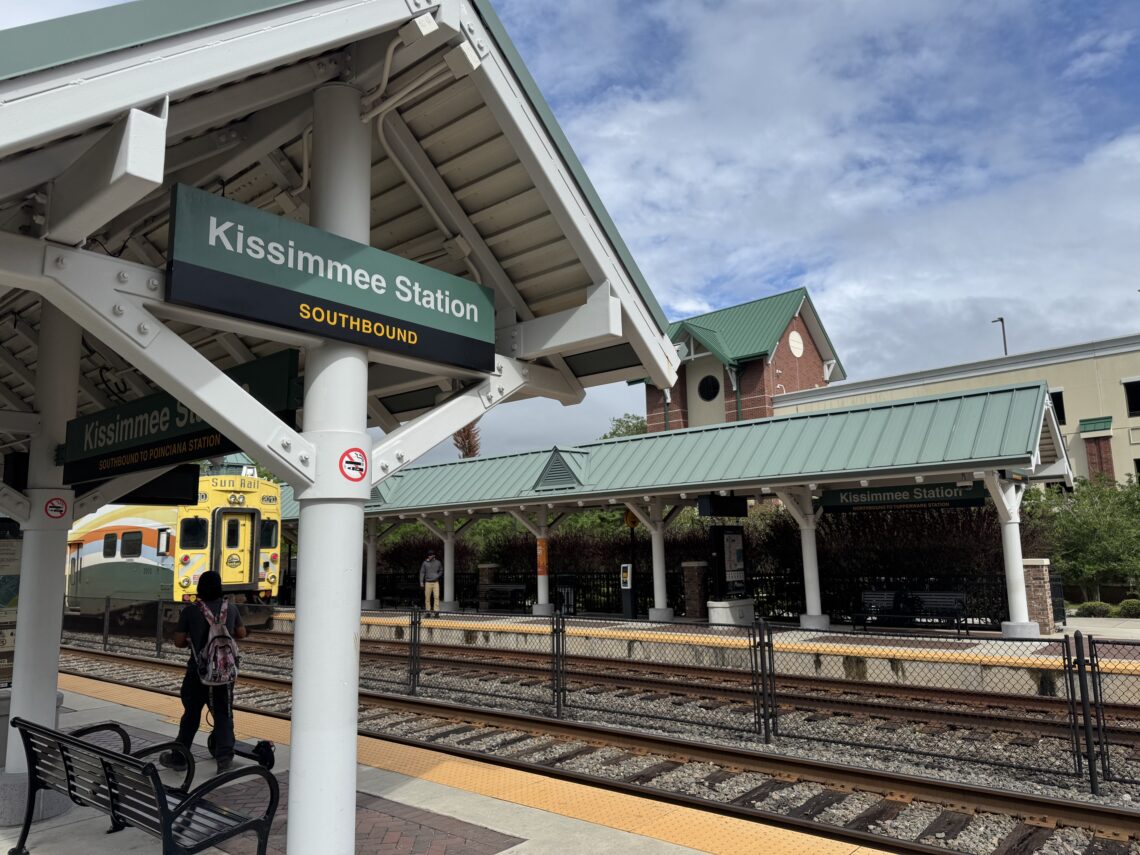
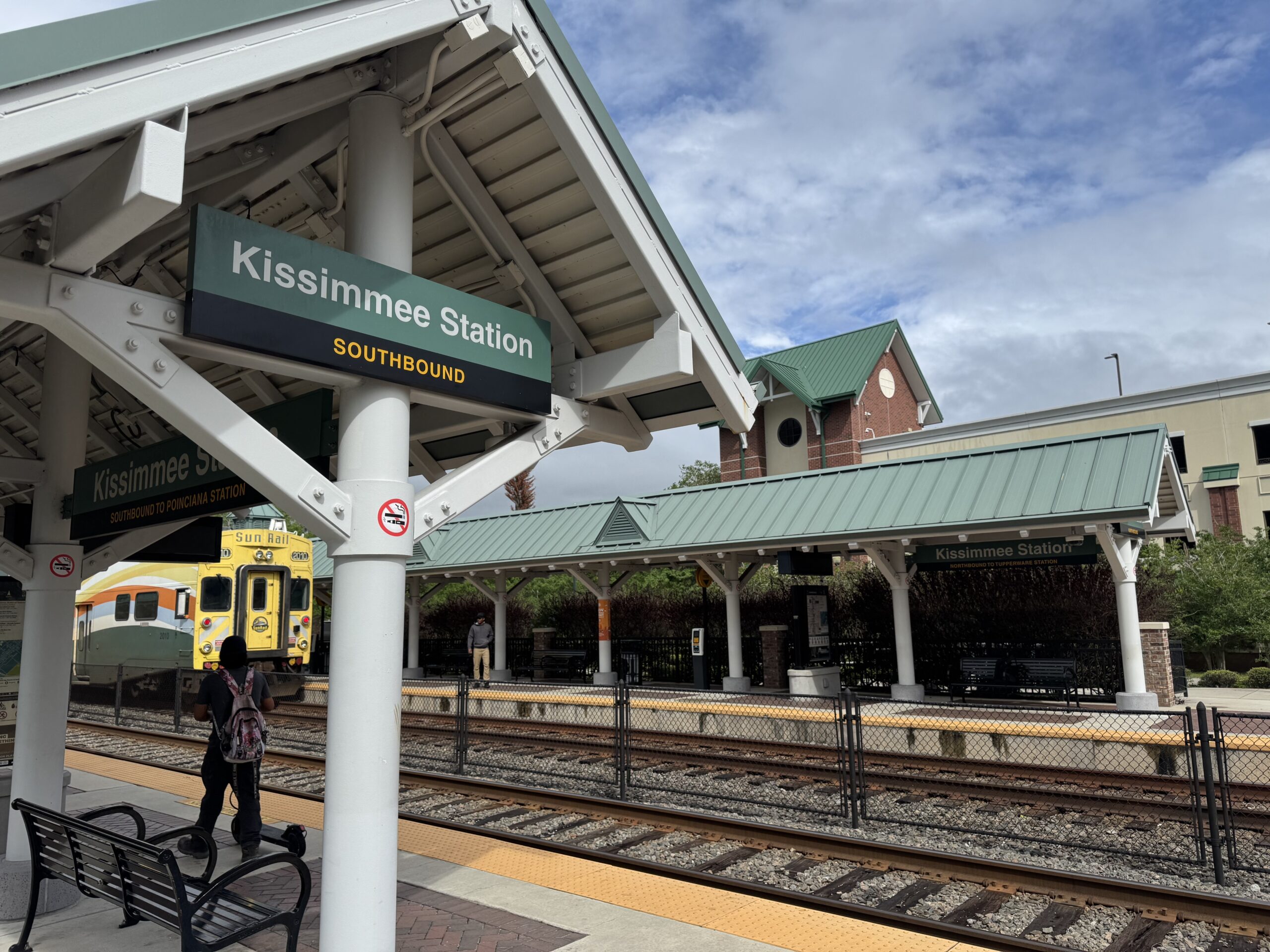
The SunRail is Central Florida’s commuter trail that operates across 17 stations along a 61-mile system. Fares for the SunRail begin at $2, and have an increase of $1 for every county crossed. For example, a person commuting from the Kissimmee station in Osceola county traveling to LYNX Central station in downtown Orlando can see a fare of $3 one-way. According to SunRail corporate, the commuter rail system experienced an impressive 24% ridership increase compared to the last two years.
For SunRail users, not having access to the train on weeknights and weekends is a huge issue. In a survey conducted by Orange county, the priorities described by SunRail passengers include evening and weekend service, increased frequency and access to more places, service connecting to the airport, adding an east-west route, and longer hours of operation.
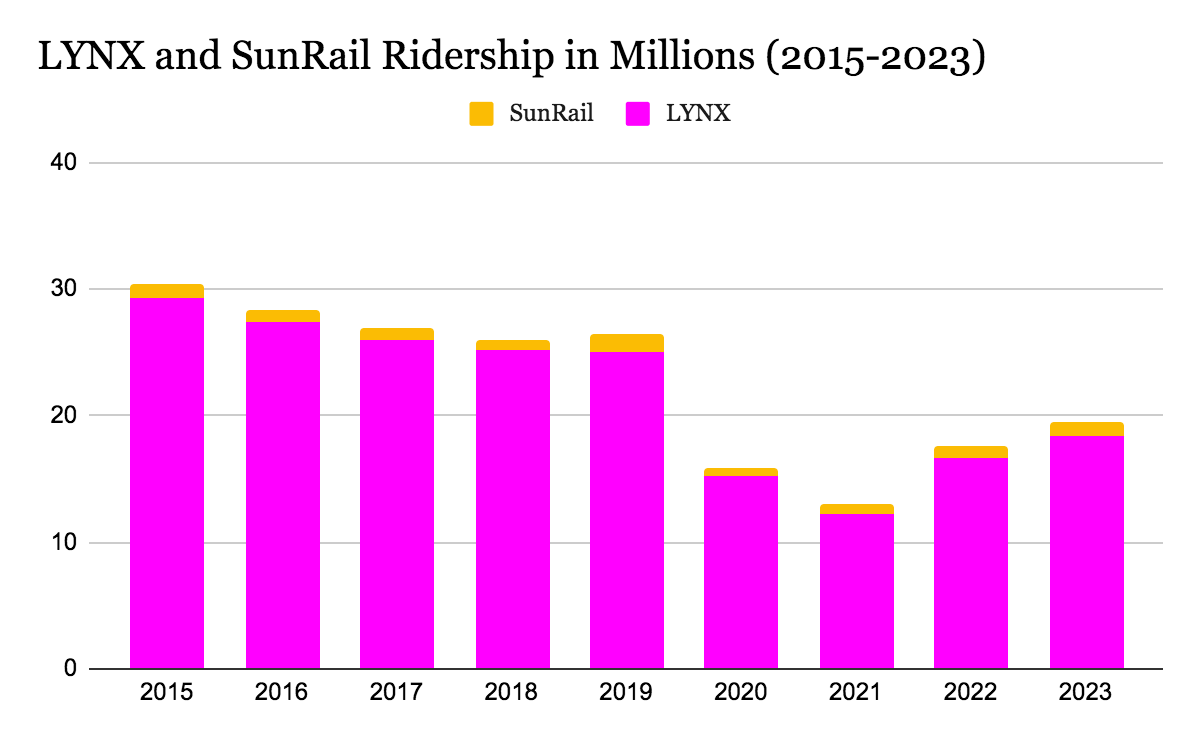
The LYNX bus service serves Orange, Osceola, and Seminole county as well as parts of Polk and Lake counties. With more than 268 buses, the LYNX transit system operates across 62 local routes for a fixed fare of $2 for a single ride. In a survey conducted by Orange county, LYNX users mentioned wanting more convenient routes and stops, increased access to more places, more frequency and express routes.
I interviewed Dominic Berardi, a University of Central Florida (UCF) student currently working on his Urban Planning degree, and a public transportation advocate. When asked about the current system in place across the United States, Dom explained that “it isn’t natural that we have to drive everywhere.”
Berardi’s experience with public transportation is a reflection of what living in a place that is transit accessible could look like. As an undergraduate student, Berardi went out of his way to live in a place that was close enough to a bus station in order to get to work and school without having to drive. By doing this, not only is he saving money, as the bus is free for students, but he describes the experience as more rewarding, and with a sense of community. When he rides the bus he is able to read a book, catch up on homework, and not have to worry about possible car accidents.
This however, is not the general experience for residents in Central Florida, as most require a 10-20 minute drive to get to their closest public transit station.
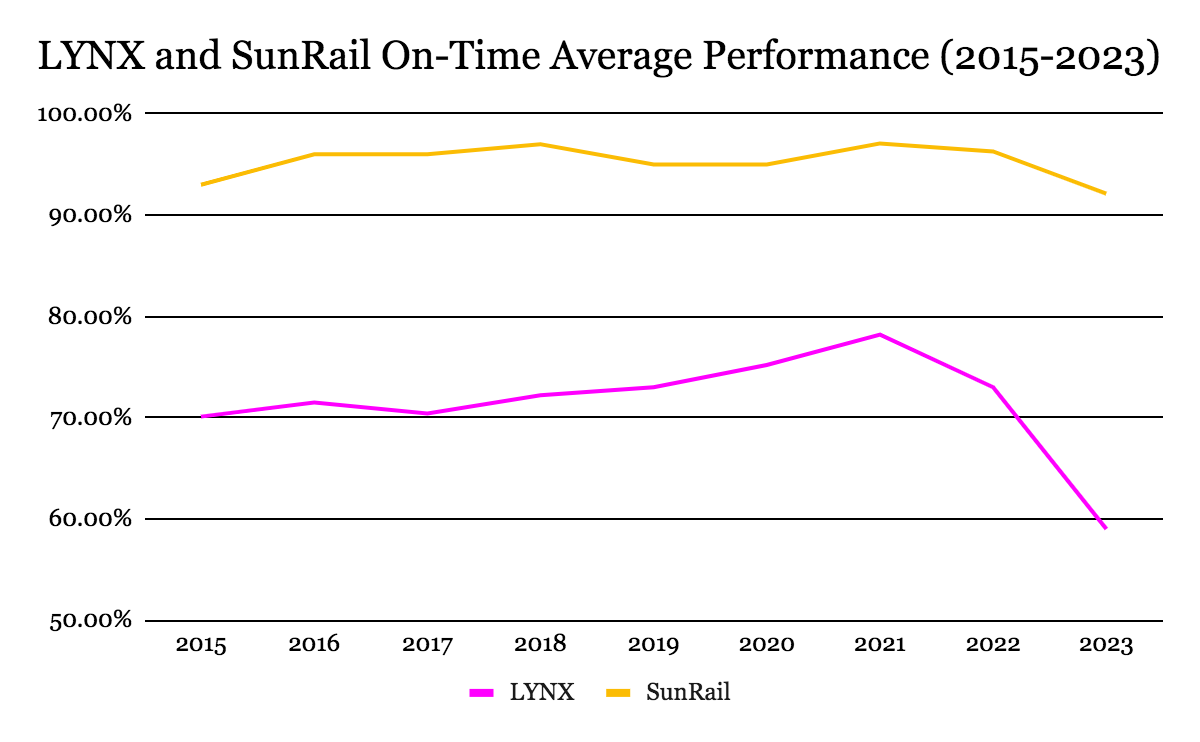
By using digital tools like the Transit App, riders are able to check on the status of their bus, and fill a survey answering questions about the cleanliness of the bus, report if there is any space on the bike rack, alert any safety concerns, and give feedback on the driver and bus. While riders have reported that wait times have improved, there is still concern about having to wait up to an hour for specific bus routes, and what safety issues that might entail.
When we talk about car-dependency, one of the things we are lacking is the community itself. INRIX, a company that analyzes traffic data across the United States, ranked Orlando as the 37th city with the most congestion in the US. People in Central Florida have lost an estimate of 32 hours stuck in traffic. This is less time with your peers, your family, and yourself.
According to a Visit Orlando report, Orlando welcomed 75,333,800 visitors in 2024. When leaving the airport, there is no transit system that can take tourists to the tourism corridor or beyond without having to do multiple bus changes. That leaves for no option other than renting a car, or having to uber for expensive rates.
Intersection between sprawl and public transportation
I asked around, and the most common answer when asked about why Orlando doesn’t have a transit system that can cover more than its urban core is sprawl. Sprawl is a growth pattern that is defined by the expansion of city (urban), suburban and exurban development, especially along the fringes of an urban center.
According to the US Census Bureau’s 2024 American Community Survey, the average commute time in Orlando was 26.1 minutes, which is more than the national average. With the geography of Central Florida being categorized as mostly flat and wetlands, developers have continued building on the outskirts of the urban core thus increasing the distances between residential and commercial areas. This means that commute times are also increased, and with car dependency being so high so does traffic.
I reached out to the Orange County District 5 Commissioners Office — Dr. Kelly Semrad Martinez about the transportation data they may have. According to this data, the majority of households in Orange County, FL spend at 18% – 29% of their income on transportation, when the average annual household income spent on transportation should be at 15%. The cycle of auto-dependency continues as the city focuses on automobile-oriented transport planning, reduced travel options, generous parking supply, and dispersed development patterns.
STAR Plan
Is Orlando too spread out to have an effective transit system in this age? A youth led climate organization, Sunrise Movement Orlando, is fighting to make Orlando more walkable, affordable and sustainable. I spoke to Giancarlo Rodriguez, the Hub Coordinator, about the STAR Plan and what it could mean to Central Florida.
The STAR Plan stands for Sunshine Transit Advance and Resolution, and it aims to consolidate a long-term transportation plan for Orange county that prioritizes fast, safe, and affordable transportation. Sunrise Movement Orlando identified six corridors across Orange county, and presented it to the Orange County Commissioners.
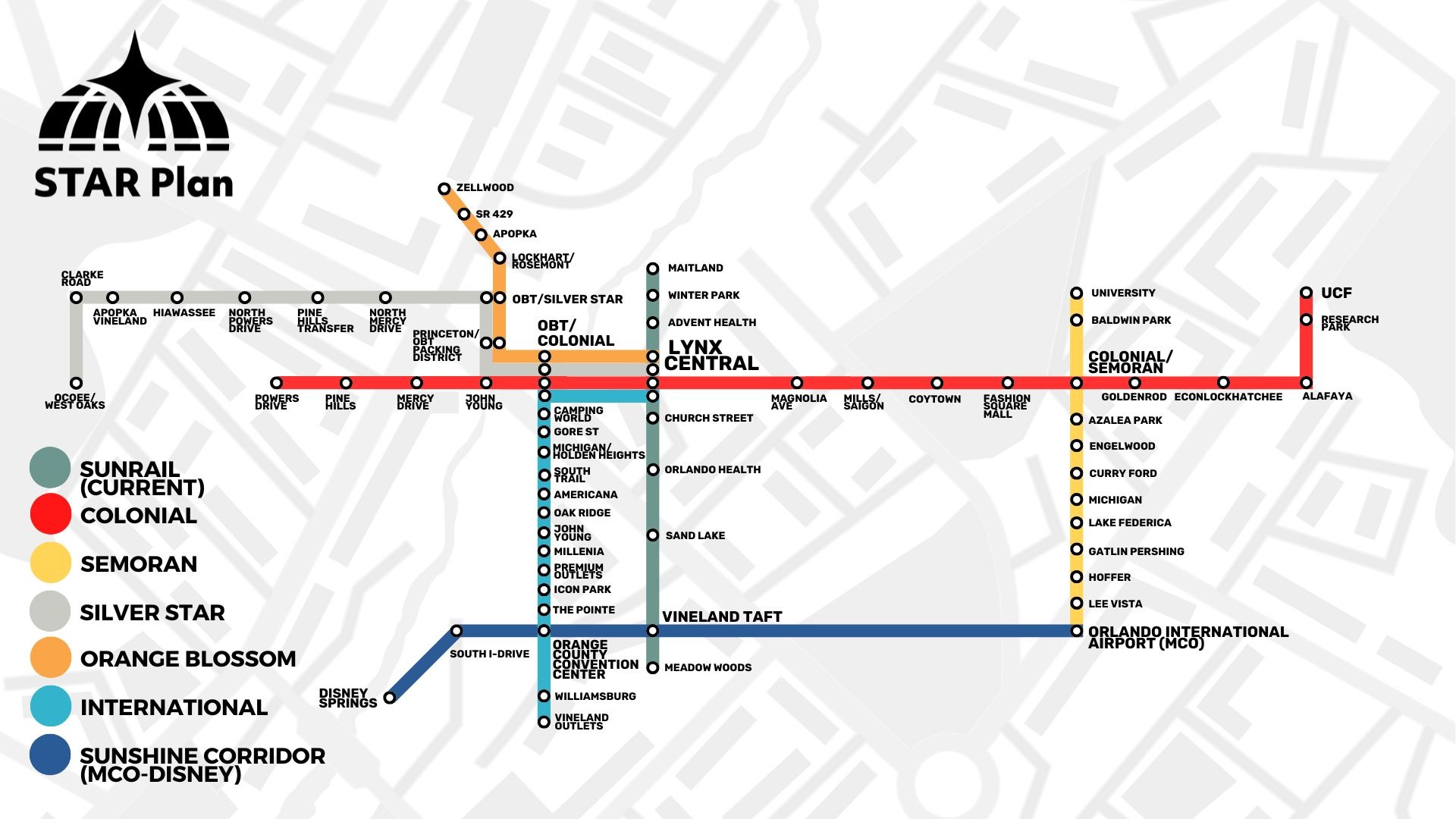
When asked about how it will get funded, Rodriguez brought up the ‘tax increment financing’ and talked about the Strategic Miami Area Rapid Transit (SMART) Plan. With tax increments financing, taxes on future gains in real estate values are used to pay for new infrastructure improvements, in this case it would go towards the STAR plan ordinance. Taking the example of Miami, a city in the same state, transportation advocates are confident that this project could be successful in Orange county.
Rodriguez described the inaction from local officials as ‘lack of imagination’ — where they are not able to see past short-term solutions. “I don’t want to think of a world where transit systems don’t improve,” said Rodriguez when I asked him how he envisioned Central Florida in the next decade.
Political Landscape
As a car-dependent city, transportation systems have long been ignored throughout the years by different elected officials. At this moment, Orange County is one of the only major metropolitan areas that does not have a dedicated funding source for transportation. To learn more about this, I spoke with Eric Grimmer, Chair of the Orange County Transportation Mobility Advisory Commission, as well as a chapter lead for Orlando YIMBY (Yes in My Backyard). Orlando YIMBY aims to improve the livability, affordability, and mobility of greater Orlando by advocating for housing density and abundance.
One of the issues in Central Florida is that Orange county is running out of land to develop. This means that developers are having to sprawl into other counties in order to satisfy the demand. There are traditionally two housing products: detached single family homes and mid rise apartment complexes. In both of these cases, you are pushing people into greater car dependency because you are moving them farther away, and people then have to drive as far as they can afford.
In a years in the making plan, Orange County set out a comprehensive plan that would lay out the blueprint for the county’s growth over the next three decades. While the growing population in Central Florida has been a major factor in the increasing traffic the region has been experiencing, there is also the factor of outdated zoning laws. The creation of Vision 2050, in conjunction with Orange Code, was created by county staff with input from stakeholders, consultants, elected officials, and the residents themselves.
In this plan, Orange county would shift from “single-use” development patterns to direct growth in the right places, creating meaningful mix-use places, protecting rural areas, and preserving natural habitats while addressing issues of housing affordability, transportation, and sustainability.
While many were excited about this comprehensive plan coming to life, Florida’s 2025 Legislative Session brought it to a halt with the passing of SB 180. This bill, meant to help communities rebuild after disasters, would instead strip away local control over land use and planning.
Orange County, as well as other Florida jurisdictions, joined together to file a lawsuit against the state of Florida challenging parts of the new law. As of March 2026, the lawsuit is still active and the Orange County government will continue to work under its current comprehensive plan until the issue is resolved.
When talking about other ways that Orange County can get ahead in improving their transportation infrastructure, Grimmer mentioned a transportation sales tax. Orange County has tried, and has talked about, the past few years about putting a transportation sales tax on the ballot for the residents of Orange County to vote on. That occurred in 2022 but it lost at the ballot, with residents ultimately voting against adopting the Regional Transportation Sales Tax, garnering 41.5% of the vote.
The proposed budgets for transportation 2027 fiscal years will be voted on by the commission by September 2026. As 2026 is a midterm year, Orange county is set to have several changes in its county commissioners, and with no dedicated funding towards transportation this is a huge opportunity for transportation advocates to speak up to potential newly elected officials.
Climate Impact
Lee Perry, founder of Organizing to Victory and a climate activist in the Central Florida region spoke to me about the climate impacts that come with the challenges of not having an effective public transportation system. By not having a mass transit system, people are forced to drive, releasing greenhouse gas emissions.
Another issue that climate activists are looking at when it comes to urban sprawl is the connectivity to utilities like electric services. It is ultimately more expensive to maintain the infrastructure, be more energy efficient, and keep communities safe by not having a system to prevent development far away from urban cores.
What will Central Florida look like in the next decade?
I spoke with Representative Anna Eskamani, who is running for Orlando mayor in 2027 about the challenges of local and state governments when it comes to funding. As she plans to transition from state government to local government, she mentioned the imperativeness of working in partnership and collaboration, as most transportation funds come from Tallahassee.
When it comes to investing in public transportation, one of the main barriers apart from funding is the lack of ridership. After meeting with advocates from different sectors, the conclusion is that Central Florida has the support and desire to invest in an affordable, fast, and effective transit system that will benefit not only the visitors, but the residents as well.
In recent years, the addition of the Brightline has helped connect thousands of passengers between South and Central Florida on a daily basis. The proposed connection between the Brightline and SunRail from the Orlando International Airport (MCO) to the Orange County Convention Center to International Dr., can potentially bring in thousands of riders a day alleviating car dependency and traffic congestion. Currently, the Central Florida Expressway Authority (CFX) is working on various projects in different regions of Central Florida. These paid roads and lane expenditures are short-term solutions that do not ultimately solve the transportation issues that Central Florida faces.
While we acknowledge the small changes like protected bike lanes, fixed bus shelters and benches, and other improvements like digital signage, there is still a lot of work to do.
For elected officials in Central Florida it is important to understand the intersectionality between health, climate, transportation and housing in order to achieve the quality of life, and public safety that Central Florida deserves.